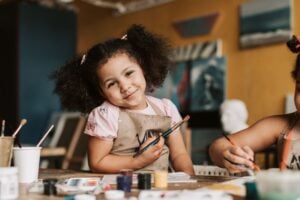
Much has been said about the benefits of STEM (science, technology, engineering and math) programming for children, but the addition of art into that fold (STEAM) has highlighted art’s important connection to education and child development.
Arts-based activities, from reading books about artists and visiting art museums to drawing, painting or crafting, can greatly impact a child’s development. The arts help children develop important skills like imagination, communication and creative problem solving, as well as giving them a constructive outlet for their emotions.
Best of all, the benefits of arts education are not limited to early childhood — taking art classes or signing up for extracurriculars can help set up high school students for success in college and early adulthood. Here are some of the key areas the arts target in child development at each age:
Early Childhood:
- Lends to development of cognitive skills
- Strengthens attachments between parent and child
- Encourages prosocial behavior
- Visual art helps infants and toddlers develop fine motor skills and engages their senses.
Kindergarten and Elementary School:
- Improved interpersonal skills
- Lower rates of behavioral issues
- In- and out-of-school art activities are linked to higher scores in reading, math and science.
- Fosters curiosity about other cultures and perspectives
Middle School:
- Participating in arts extracurriculars can help students make new friends and form social groups.
- Lowers stress and boosts self-confidence
- Group art projects can foster teamwork skills.
- Art skills can be applied to other subjects.
High School:
- Positive relationship between the number of arts credits taken and the likelihood of receiving a diploma
- Fosters critical thinking skills and creative problem-solving abilities
- Creative skills can aid in job searching.