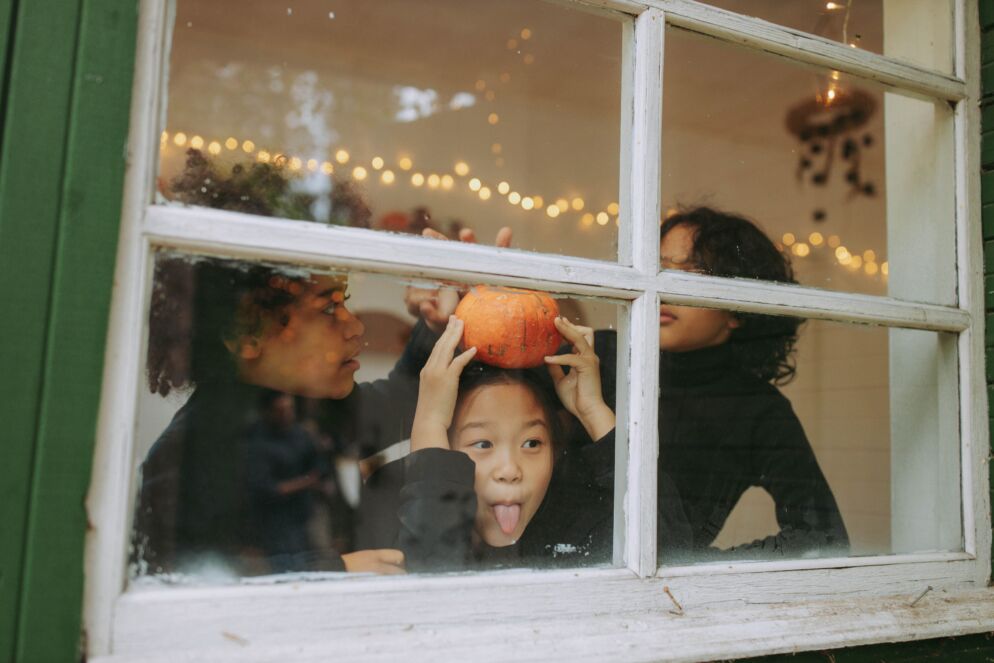
The Soar Autism Center in Maryland presents a parent’s guide to a sensory-friendly Halloween for young kids with autism.
If you’ve scrolled into a parenting group this month, you’ve probably seen the debate. Should a child with autism carry a blue Halloween bucket?
The idea is that a blue bucket tells neighbors a child may not say “trick or treat” or “thank you” in the expected way. Some families appreciate the understanding it can bring. Many autistic adults and advocates worry about how it labels children in public. There’s no right answer, and it’s one of many choices Maryland parents are making this season if they have a child with autism.
It’s a question more local families are facing. In a five-county area around Baltimore, researchers at the Johns Hopkins Bloomberg School of Public Health found that about one in 41 4-year-olds had already been identified with autism, according to the most recent Centers for Disease Control (CDC) data. Among 8-year-olds, it was about one in 38.
Whatever you decide about the bucket, the bigger question is what kind of night will work for your child. Here’s how to think it through.
Start With Your Child, Not the Calendar
Before you plan your family’s Halloween activities, notice what your child is excited about and what feels hard. That answer shapes everything else.
- Gets excited about costumes and pumpkins? Plan a short route or a trunk-or-treat, with an easy way home.
- Sensitive to noise, lights or crowds? Go in daylight on a known route, bring headphones and skip the big displays.
- Does best with one grown-up? Visit a few quiet houses with neighbors you know, before streets get busy.
- Has siblings who want a longer night? Bring a second adult so your child can head home while others keep going.
- Tired by evening? Do an early loop or let pajamas be the costume and celebrate at home.
A little of both works, too. Three houses before dinner, then home to hand out treats, is a full Halloween.
Choose Comfort in the Costume
Build the costume around something your child loves, and then check how it feels. Opt for soft cotton or fleece, no tags, flat seams and a front zipper that makes it easy to get on and off. Skip masks, which can feel hard to breathe in and change how things look and sound. A hood with ears works just as well. If one piece is a problem, leave it off. A dinosaur without a tail is still a dinosaur.
Practice Through Play
Short, playful practice helps new routines feel familiar. A week out, take turns knocking on a bedroom door and handing over a treat. Walk your route in daylight. Make a simple picture schedule of the night (costume, walk, knock, treat, home) so your child can see when it ends. Practice an “all done” word, sign or visual card.
Celebrate Every Way Your Child Joins In
A wave, a point, a smile or holding up a bucket is participation. If your child uses an AAC device, bring it, or tape a few picture symbols to the bucket. Rather than prompting (“Say trick or treat”), narrate the moment: “Knock, knock!” “Ooh, a pumpkin!”
Watch for early signs your child has had enough: going quiet, covering ears, chewing a sleeve or walking faster. Take breaks before you need them and head home while the night still feels good.
If You’re the One at the Door
Whatever bucket shows up on your porch, the simplest welcome works for every child. Smile, offer the bowl and don’t wait for the words. Consider a teal pumpkin, too, which signals non-food treats like stickers or glow sticks for kids with allergies or limited diets.
If sounds, clothing or crowds make everyday routines hard, not just on Halloween, mention it to your pediatrician. Support is available, and starting early helps.
Taylor Diemer, M.S., CCC-SLP, is Soar Autism Center’s Head of Speech Therapy Services in Maryland. For additional resources, visit soarautismcenter.com.