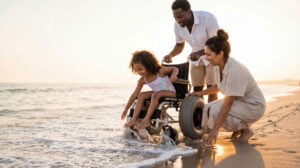
Planning a vacation with children is difficult enough, but parents of children with disabilities have many more factors to take into account when scheduling a trip. Not only do they have to consider which destinations are kid-friendly and age-appropriate, but also if they are accessible, what resources are available for guests with disabilities and which travel methods are feasible for them.
But a disability should never stop someone from being able to travel. Seeing the world is an enriching experience, especially for children. And there are plenty of resources parents can utilize to plan a trip that everyone can enjoy, whether they are able-bodied or require accommodations. Parents should consider these tips when planning their next vacation.
Summer Activities With a Disability
Hiking may not seem like an accessible activity at first, but many state and national parks have wheelchair-friendly trails and walkways to make the experience easier for hikers who use mobility devices. For example, Great Falls Park in McLean,Virginia, has several wheelchair-accessible lookout points for seeing its waterfalls, while Catoctin Mountain State Park in Thurmont, Maryland, has several wheelchair-accessible trails, campsites and exhibits. If a park you’re interested in visiting does not list its ADA features on its website, the hiking database AllTrails has compiled many lists of wheelchair-accessible trails.
Some major theme parks, such as Disney World and Universal Studios, have dedicated accessibility services that include shortened lines for rides, being able to rent wheelchairs or requesting close captioning or braille. Several amusement parks across the U.S. participate in the IBCCES Accessibility Card program, which allows guests to request accommodations at no cost. These include Dorney Park and Kennywood in Pennsylvania, Kings Dominion in Virginia and Cedar Point in Ohio.
If your child has an invisible disability, it may be worth inquiring about if the attractions you’re visiting are part of the Hidden Disabilities Sunflower program. Travelers can request a sunflower lanyard to indicate that they need additional time and accommodation without having to speak with a staff member. Despite the initiative’s name, it is also open to travelers with visible disabilities. The Baltimore/Washington International Thurgood Marshall Airport started participating in this program in 2025.
Camping as a family is a popular summer activity. To help families with disabilities find the best amenities at campsites, The Maryland Department of Natural Resources has a list of accessible sites, full-service cabins and camper cabins (as well as other accessible spaces at Maryland parks) at dnr.maryland.gov/publiclands/Pages/accessforall.aspx.
Finally, many attractions hold sensory-friendly hours or days where visitors can have a quieter experience. The National Children’s Museum in D.C. and LEGO Discovery Center Washington, D.C. in Springfield, Virginia, hold sensory-friendly mornings with fewer guests, a calmer atmosphere and sensory tools available for use. Before you visit, check the attraction’s calendar online to see if your trip lines up with one of these events.
Smart Travel Tips
Make Reservations in Advance
Reaching out to prospective attractions, hotels, airlines and more before your vacation can save you stress later down the line. Major airlines like Delta Airlines, Southwest Airlines, American Airlines and JetBlue, as well as ground transportation services like Greyhound Bus and AmTrak, have dedicated phone numbers for disability-related inquiries. Many hotels have dedicated accessible rooms that can be reserved in advance, which often contain features like wider doorways, roll-in showers or ramps. Speak directly with hotel staff to confirm the room would fit your needs and ensure placement. Simply putting in an informal request may not be enough to be placed in an accessible room.
Pack Smart
For air travel, medical necessities like medication, inhalers or assistive devices should be stored in a traveler’s carry-on bag rather than in checked baggage in case luggage is lost or delayed and your child has a medical emergency.
Some assistive devices like wheelchairs and strollers may be too large for a carry-on, so you should label them before checking them and provide written instructions for how to use and store them, as airline personnel may not be familiar with it.
For travelers with developmental disabilities or who are neurodivergent, traveling can be very overwhelming. Packing sensory items such as noise-canceling headphones and calming toys can help them feel more comfortable in unfamiliar situations.
Keep a Routine
Some kids and adults with neurodivergence or developmental disabilities value daily routines and can struggle when they are interrupted. Planning a travel itinerary beforehand can help prepare your family, giving them a sense of structure and things to look forward to each day. Having a set schedule can save you a lot of time in the long run. Keeping certain activities consistent between home and travel, such as meal times, can help neurodivergent travelers adjust during the trip.
Bringing comfort items, like a familiar stuffed animal or favorite water bottle, can also provide a sense of familiarity while in an unfamiliar location.
Be Prepared for Anything
Ideally, your vacation will be stress-free. But it’s a good idea to take note of any hospitals or urgent care centers on your route or near your destination.
Travel insurance may also be worth purchasing in case of any delays or medical emergencies. Some of the best insurance providers for travelers with disabilities include Travelex Insurance, which covers pre-existing conditions, and Able2Travel, which specializes in travel insurance for people with medical conditions.
Be sure to also establish an emergency contact — ideally, a relative or friend you can rely on. This is especially important for people with disabilities who are traveling alone and can be helpful if something goes wrong at home while you’re not there to take care of it.
Autism-Friendly Vacation Destinations
If your child has autism, check out these attractions, resorts and more that keep guests with autism in mind!
Autism on the Seas | Throughout the U.S.
In the mood for a cruise? Autism on the Seas collaborates with Royal Caribbean International to plan ocean voyages for families whose children have autism or other intellectual or developmental disabilities. Prospective destinations include Florida, England, Canada and Bermuda.
Great Wolf Lodge | Perryville, MD and Williamsburg, VA
Great Wolf Lodge is well-known for its accommodations for children with autism, as it has partnered with IBCCES to create sensory guides for all of its water features, attractions and shows. If attractions like the water park, arcade or MagiQuest are too overstimulating, these resorts also have dedicated quiet areas.
Legoland New York Resort | Goshen, NY
This LEGO-themed hotel and resort is a Certified Autism Center, offering sensory guides for each of its attractions and low-sensory areas with adjustable lights and sensory swings. Guests are encouraged to visit its Guest Experience Center if they have any questions or additional accommodation requests.
Sesame Place | Philadelphia, PA
Sesame Place holds the honor of being the first theme park to be designated as a Certified Autism Center. The theme park’s staff are trained to accommodate and serve children with special needs, and sensory tools like noise-canceling headphones are available for visitors. Young guests can even meet Julia, a Sesame Street resident with autism.
YOTEL Washington DC | Washington, D.C.
YOTEL Washington DC is the first hotel in the U.S. to receive an Autism Friendly Designation from Autism Speaks, with a specially-trained team and sensory-friendly features. It’s a great place for families of children with autism to stay during a visit to the nation’s capital.